Linen, Twill or Jersey: Three Different Kinds of Drape
Compare linen, twill and jersey drape by how each fabric hangs, folds and moves, so you can choose a garment silhouette with more confidence.
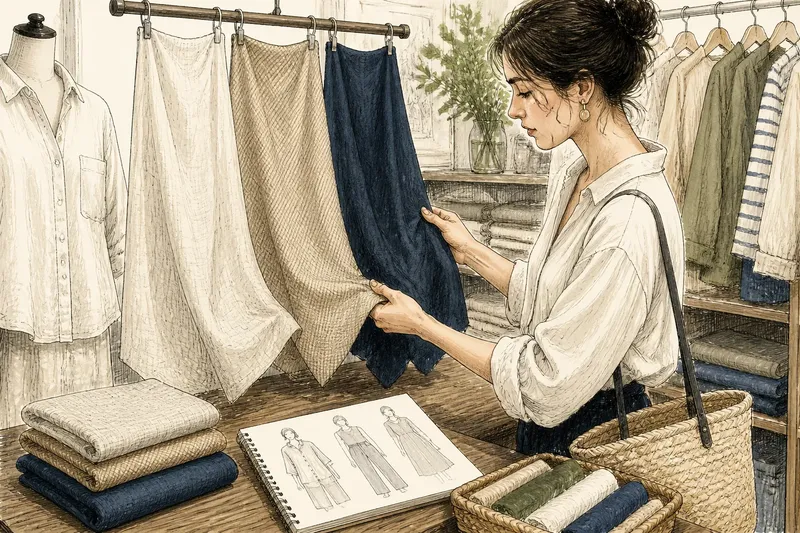
Linen, twill and jersey drape differently, so compare the actual cloth before choosing a shirt, skirt or pair of trousers. Linen often holds airy, crisp folds; twill can form a steadier line; jersey commonly follows the body more closely.
Drape is how fabric hangs under its own weight and responds to movement. It affects whether a sleeve stands away from the arm, a skirt swings out or a trouser leg traces the shape beneath it. Fibre, thickness, finish and construction all contribute, so two fabrics with the same label can behave differently.
What does drape mean in a garment?
Drape describes how fabric hangs, folds and moves on or around the body. Soft cloth bends readily and may form rounded folds; firmer cloth holds a clearer outline and can project away from the body.
Notice three qualities separately: how much the cloth sags under its own weight, how easily it bends and how it swings as you move. These qualities do not always align. Fabric can feel light yet retain a crisp shape, or feel substantial while falling in fluid folds.
Drape is not the same as stretch. Stretch describes a fabric’s ability to lengthen and recover; drape describes how it falls. Jersey often has both, while a woven twill can have fluid drape without stretching much.
How does linen drape compared with twill and jersey?
Linen often has an airy, slightly crisp drape, though its behaviour depends on yarn, weave and finishing. It may form visible creases and angular folds rather than settling into a smooth, close outline. In a shirt or loose dress, that can look relaxed while retaining some shape.
Twill is a woven structure recognised by diagonal lines on its surface. Its drape varies: light cotton twill may bend readily, while heavier denim or suiting twill can hold a more defined silhouette. The diagonal weave can feel supple, but it does not make every twill soft or flowing.
Jersey is knitted rather than woven, with loops that let the fabric bend and often stretch. Lightweight jersey may cling or ripple, while denser jersey can hang in longer, weightier folds. Its movement tends to follow the body more than firm linen or substantial twill.
These are tendencies, not rules. Fine linen may drape more softly than stiff cotton twill, and heavy jersey may feel steadier than thin, loosely woven fabric. Examine the actual cloth and finished garment rather than choosing by name alone.
Which fabric suits the silhouette you want?
Choose according to the outline you want, not an assumed ranking of fabrics. Linen can suit a loose shirt with sleeves that should keep some volume. A suitable twill may help trousers or a skirt maintain a clear line, while jersey can work for a close-fitting top or softly swinging dress.
Think about where the cloth needs to stand away from the body and where it should follow it. A full skirt needs enough body to preserve its shape; gathered fabric should form folds without becoming bulky. A relaxed jacket may need twill with enough substance to support its outline, while fluid jersey will create a softer effect.
Say you want a warm-weather shirt that looks relaxed but not clingy. Imagine you have three swatches: crisp linen, medium cotton twill and light jersey. Hold each by one edge and let it fall; if the linen keeps a roomy fold, the twill makes a straighter line and the jersey settles close to your hand, the likely trade-off is clear. Choose based on the silhouette you prefer, then check the garment’s opacity and weight.
How can you compare fabric drape in a shop?
Ask permission before handling cloth on a bolt or a garment in a shop. Use the same gentle motions for each fabric so the comparison is fair, and treat the result as a guide rather than a prediction of every detail in a finished garment.
- Check the hanging edge: If it falls straight, expect a cleaner line; if it ripples or kicks outward, consider another cloth if you want a smooth outline.
- Gather a small section: If folds stay angular, choose it for a more defined effect; if they bunch densely, compare a more pliable option for a less bulky gathered shape.
- Lift and release the cloth gently: If it settles quickly, consider it for a steadier silhouette; if it keeps swaying, choose it if you want visible movement, or compare a firmer fabric if you do not.
- Feel the cloth’s body: If it feels crisp or weighty, consider it where the garment needs structure; if it feels limp, look for another option if the shape must stand away from the body.
- Hold it against a contrasting background: If it looks translucent, plan for a lining or another fabric if coverage matters; if it appears opaque, assess whether its drape still suits the cut.
- Inspect a finished garment’s seams and pleats: If construction controls the shape, judge the garment in motion rather than relying on the fabric alone; if the cloth moves freely, compare its fall with the outline you want.
A skirt’s movement may come partly from its cut, and a sleeve may look crisp because of its shape even when the cloth is supple. When possible, compare similar garment shapes rather than treating a loose dress and fitted top as a direct fabric comparison.
Why can the same fabric name behave differently?
A fibre label does not describe the whole construction. Linen, cotton or wool identifies fibre content; jersey and twill describe knitted or woven structures. A fabric can combine fibres, and yarn thickness, density and finish all influence its weight and fall.
Finishing matters too. Brushing can soften a surface, while pressing or coating may alter its handle. Washing can change how cloth settles. On a garment, lining, seams and pleats also affect movement, so fabric on a bolt may behave differently from the finished piece.
Check the garment label or maker’s care instructions before washing or pressing. If an item is delicate or its care is unclear, ask a qualified cleaner rather than trying an uncertain treatment. Care advice helps preserve the cloth, but it does not replace judging its drape by sight and touch.
What should you know before choosing linen, twill or jersey?
Does linen always crease more than twill?
No. Linen is commonly associated with visible creases, but the result depends on construction, finish and wear. A light or loosely structured twill can crease too, while firmer linen may keep a more defined shape.
Is jersey always clingy?
No. Lightweight jersey can follow the body closely, but heavier or denser knit may hang in broader folds. Fit, cut and stretch also affect whether the finished garment feels close or relaxed.
Can twill have a soft, flowing drape?
Yes. Twill covers many weights and fibre combinations, so some versions feel pliable and fall fluidly. Its diagonal surface identifies the weave, not a fixed level of stiffness or softness.
Should I choose by drape or fibre content?
Use both, because they answer different questions. Drape helps you picture silhouette and movement; fibre content tells you what the cloth is made from and informs care. If appearance is your priority, handle the fabric and assess how it behaves in the garment shape you want.
Which fabric differences are worth your attention?
Focus on what you can see in the finished outfit: whether fabric holds volume, falls close, forms crisp folds or swings as you move. Those observations make linen, twill and jersey useful distinctions, even though labels alone cannot settle the choice.
It is not worth trying to infer exact behaviour from a fabric name, a single photograph or a few visible fibres. If you can, compare the garment in motion and inspect how the cloth behaves at its hem, sleeve and main body. For linen, twill or jersey drape, that direct comparison is more useful than treating any one structure as the automatic choice for a style.